
Overfitting: when your strategy memorised the past
There’s a fine line between a strategy that found a real pattern and one that simply memorised the chart you tuned it on. Telling them apart is most of the work.
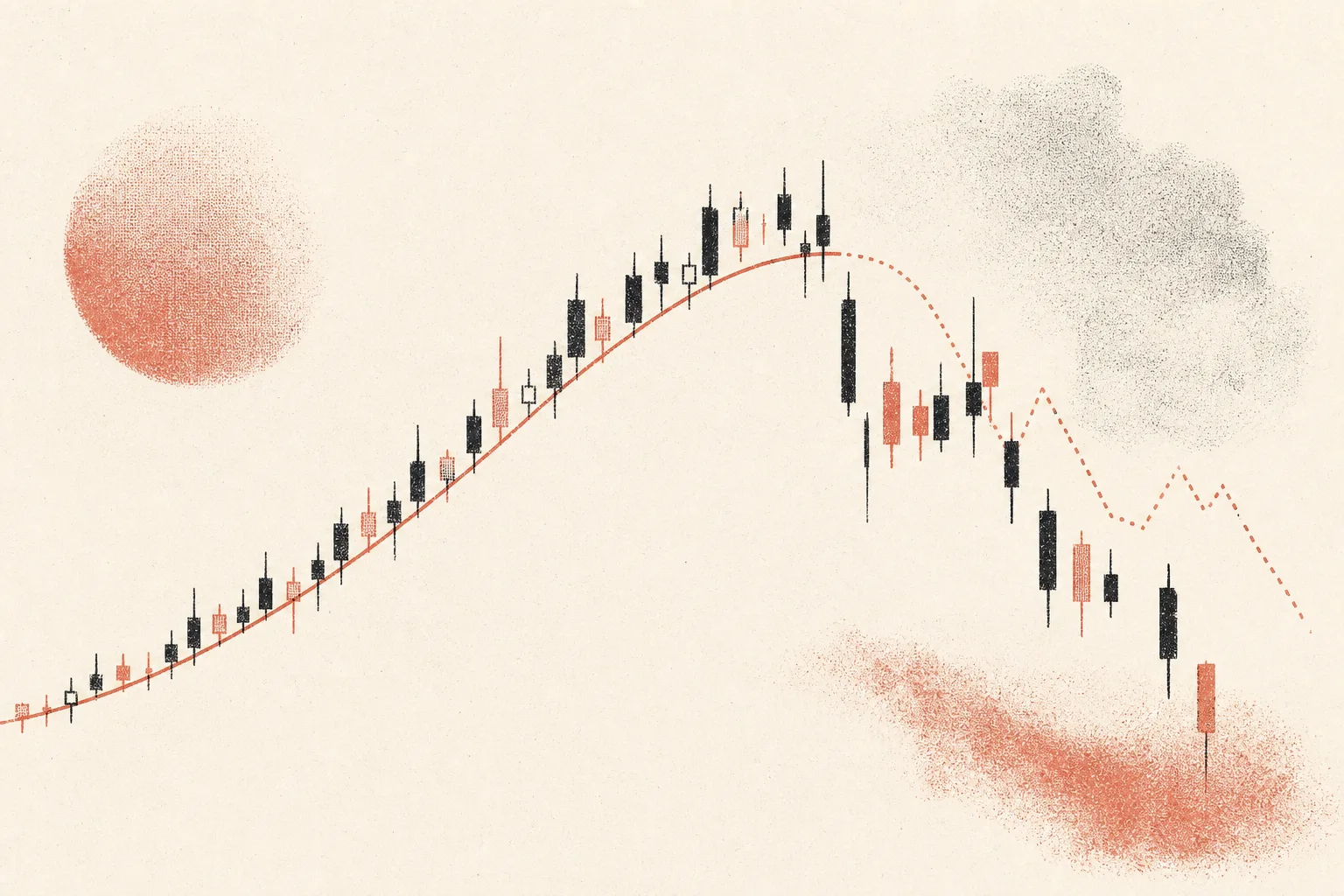
Here’s a strategy that looks incredible. Tweaked just right, it returns something absurd over the last two years. Every parameter dialled in, the equity curve a smooth ramp to the top right. The trader who built it is, understandably, excited. And it will almost certainly fall apart the moment it meets a chart it hasn’t seen.
Not because they did anything dishonest. Because somewhere in all that tuning, the strategy stopped learning how the market behaves and started memorising what this particular slice of history did. That’s overfitting, and it’s the most common way good intentions produce a useless system.
The difference between learning and memorising
There’s a real distinction here, and it’s the whole game. A strategy that found something real has learned a pattern that exists in markets generally. A pullback into a level tends to get bought. Momentum tends to persist a little longer than feels comfortable. Whatever it is, it’s a property of how price moves, so it shows up on data the strategy has never seen.
A memorised strategy learned the specific accidents of one chart. It knows that on this data, a 14-period setting with this exact filter and that exact stop happened to dodge the losers and catch the winners. But those were accidents. The next stretch of market has different accidents, and the memorised rules have no idea what to do with them.
The cruel part is that both look identical on the data you tuned them on. A beautiful backtest tells you nothing about which one you’ve got.
How to tell them apart
The only reliable test is data the strategy never touched during tuning. You hold a chunk of history back, tune on the rest, and then run the finished thing on the held-back part cold. A strategy that learned something real holds up roughly. A memorised one falls off a cliff, because the accidents it relied on aren’t there.
A few tells point the same way. If tiny changes to a parameter cause big swings in results, that’s memorising, because a real edge is robust to small nudges. If the strategy has a dozen parameters all tuned to perfection, suspicion should be high, because every extra knob is another chance to fit noise. And if it has a rule that only ever helped once, on one famous move, that rule learned a single day, not a pattern.
Why fewer knobs is safer
The deeper lesson is that complexity is dangerous in exactly the place it feels reassuring. Every parameter you add gives the strategy another way to contort itself around the specific past. A simple system with two or three sensible rules has far less room to memorise, so when it works, it’s more likely working for a real reason. An elaborate one with everything optimised is mostly an elaborate description of a chart that’s already gone.
So when a backtest looks too good, that’s not the finish line. It’s the moment to get suspicious, hold out fresh data, and find out whether you built something that understands markets or something that just memorised one. The market is about to give you the answer either way. Better to know before it costs you.
The useful version
Overfitting is not just “too many settings.” It is when the settings explain the past better than they explain the market.
A strategy with five parameters can be overfit. A strategy with twenty can be robust if each parameter expresses a real market constraint and survives variation. The issue is whether the rule has a reason beyond “it made the backtest nicer.”
How to pressure-test it
Run the ugly tests:
- Move each key parameter up and down.
- Test another symbol with similar structure.
- Split the history into development and untouched review periods.
- Remove one filter at a time.
- Add realistic fees and slippage before optimisation, not after.
The curve should degrade gracefully. If it falls apart the moment one number changes, the strategy did not learn the market. It memorised the worksheet.