
The 99 MA, and the quiet power of a number everyone shares
Some traders swear by the 99-period moving average. The number isn’t magic, but the reason it sometimes works is worth understanding before you trust any moving average on your chart.
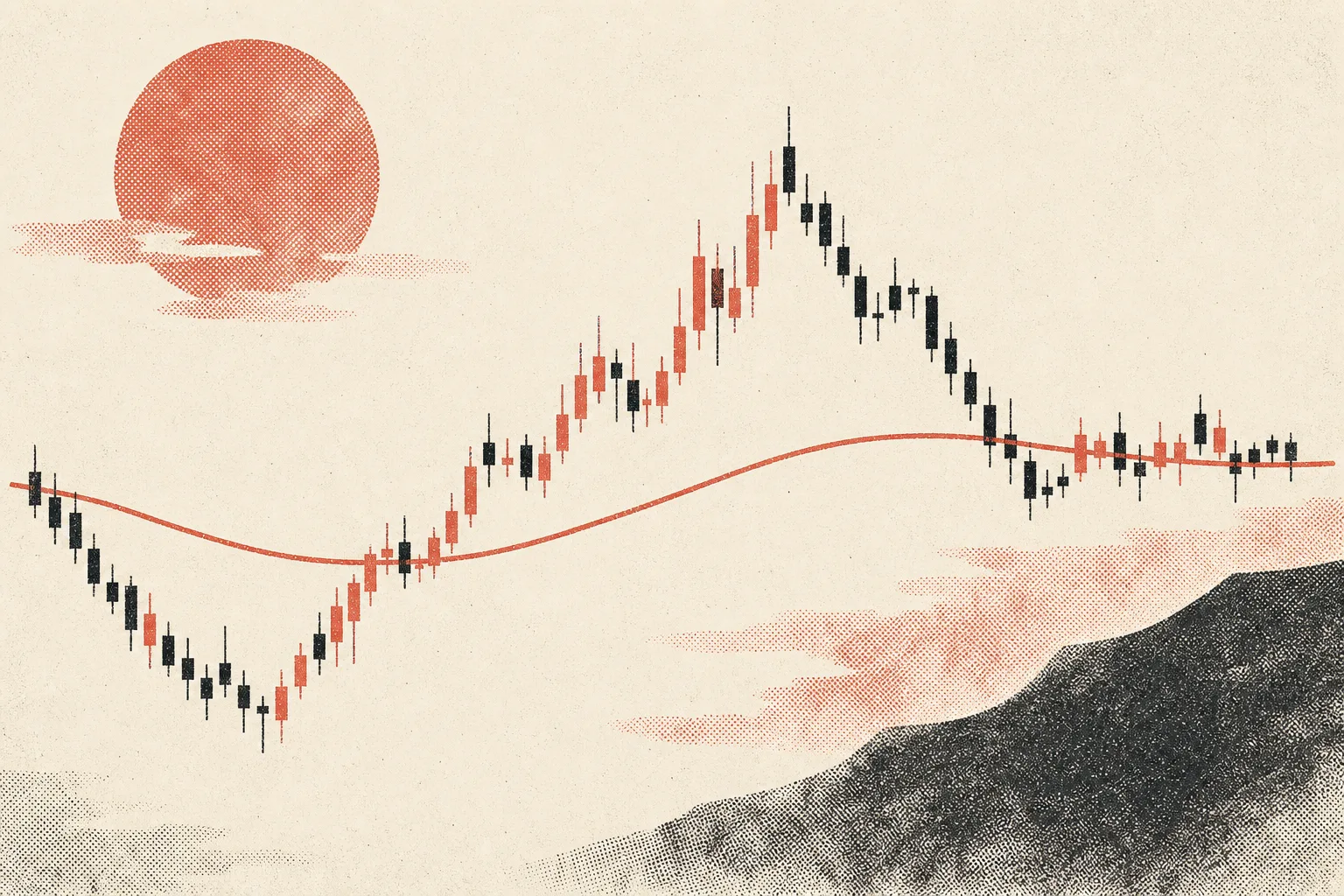
Spend long enough in trading circles and you’ll meet someone who swears by one specific moving average. For some it’s the 200. For others the 50, the 21, the 9. And every so often you’ll run into a crowd that lives and dies by the 99, convinced there’s something special in that exact number.
There isn’t. But the conviction is the interesting part, and it points at something real about how levels actually work.
A number isn’t magic. A crowd is.
A 99-period moving average has no special mathematical property. It’s the average of the last 99 closes, and 99 is just a round-ish number a lot of people happened to land on. The maths doesn’t care. Price doesn’t owe that line any respect.
And yet sometimes price does seem to respect it. Bounces off it. Stalls at it. Why? Not because the number is powerful. Because enough traders are watching the same line that their watching becomes the thing that moves price. If a few thousand people have the same 99 MA on the same chart, and a chunk of them have decided it’s support, they’ll buy near it. That buying is real. The level holds. Then everyone nods and says see, the 99 works, when what actually worked was the agreement to watch it.
This is a self-fulfilling loop, and it’s the only reason any “magic number” ever works. The 200-day moving average gets talked about on television, so institutions and retail both watch it, so it matters, because so many eyes are on it that behaviour clusters there. The number didn’t earn that. The crowd lent it the power.
Why this is worth knowing
It changes what you’re actually looking for. You’re not hunting the mathematically correct moving average. There isn’t one. You’re looking for the one that’s widely watched on the thing you trade, because a watched level behaves, and an ignored one is just a wavy line.
So a level’s usefulness depends on the instrument and the crowd around it. The 99 might genuinely carry weight on a market where a big community drills it into everyone’s head. On a different instrument, with different participants, the same 99 means nothing, and some other number is the one people defend. Copy a guru’s favourite setting onto a market their crowd never watches and you’ve brought a key for the wrong lock.
The practical version
Two things follow, and they’re both simple. First, when someone swears by a specific number, don’t dismiss it and don’t worship it. Ask whether the crowd on that market is actually watching it, because that, not the number, is the source of any edge. Second, the level only keeps working while the crowd keeps watching. Attention drifts. The magic number of five years ago can quietly stop mattering, and nobody sends a memo.
A moving average is a mirror for where attention is pooling. Read it that way and a watched line becomes genuinely useful. Treat the number as sacred and you’ll keep defending a level long after everyone else has wandered off to watch something else.
The useful version
The 99 MA is not powerful because the number is mystical. Shared numbers can matter because other people see them, code them, and react around them.
That makes it a behaviour question, not a numerology question. You are not asking “is 99 special?” You are asking “does price repeatedly react around this shared reference in the market I trade?”
How to test it without fooling yourself
Do not scroll back and collect pretty touches. Define the reaction first:
- price approaches the MA from one side;
- the candle closes back away from it, or accepts through it;
- follow-through appears within the next one to three bars;
- the trade has a clear invalidation point.
Then count failures as well as clean reactions. If the MA is useful, it should improve a decision you already make. If it only looks good after you cherry-pick the chart, it is not a level. It is a story.